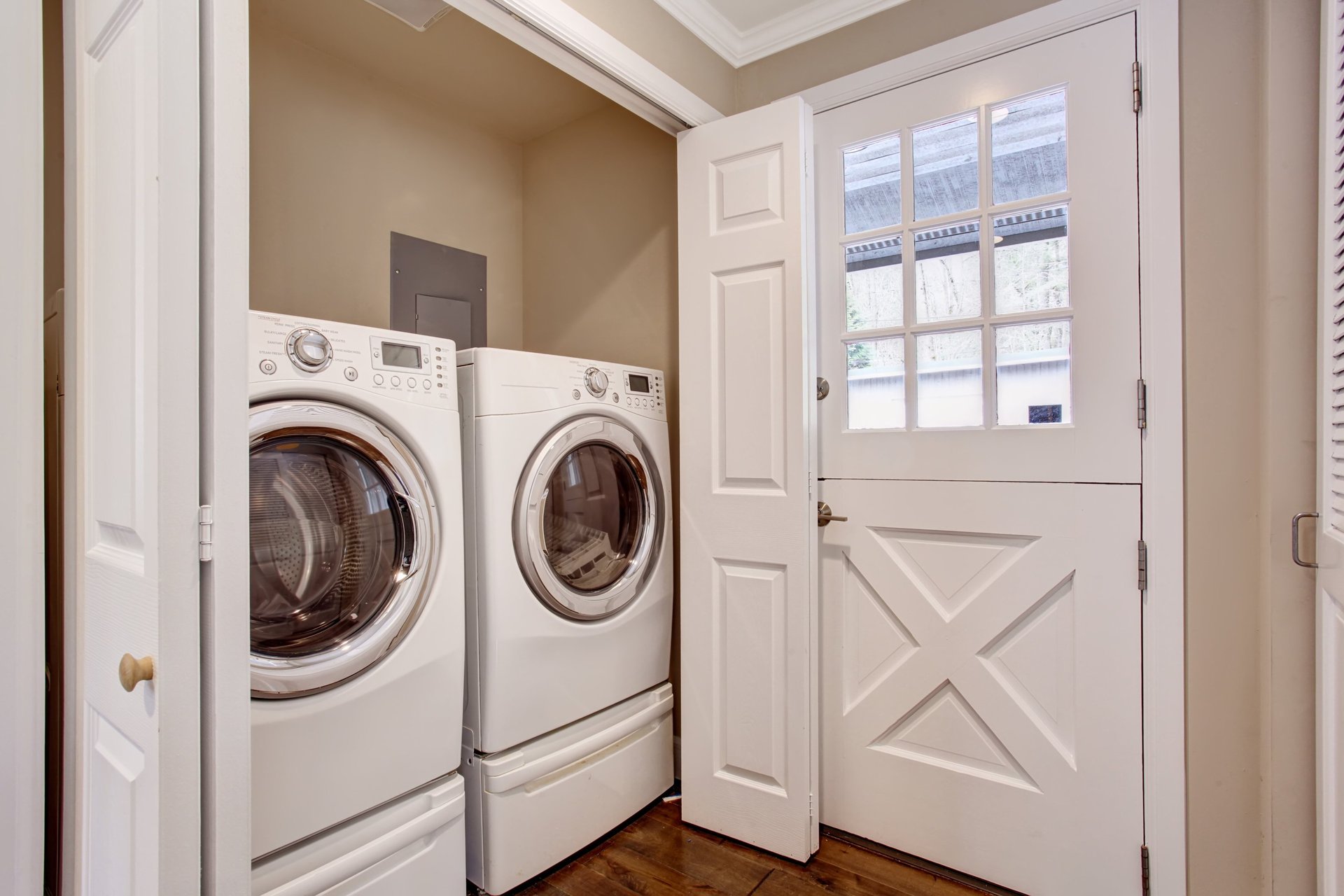
The Amana Washer: Direct-Drive Simplicity
Amana washers are the entry-level option in the Whirlpool family, and that's actually a compliment when it comes to serviceability. Many Amana top-load washers still use the proven direct-drive transmission system that Whirlpool perfected decades ago. No belt to slip or break. The motor couples directly to the transmission through a motor coupling — a small plastic and rubber connector that's designed to be the weak link, protecting the more expensive motor and transmission.
Older Amana models feature mechanical timers rather than electronic control boards. I've been working on these timer-driven machines for most of my 45-year career, and they're among the most diagnosable washers ever built. Every function is controlled by a physical switch contact in the timer, so troubleshooting is logical and predictable.
An Amana Washer That Filled But Wouldn't Agitate
A homeowner in South Minneapolis near Powderhorn Park called about her Amana top-loader. It would fill with water normally, but when it should have started agitating, it just hummed. No movement at all from the agitator or the tub.
I pulled the washer out and tilted it back. The motor coupling — that plastic and rubber connector between the motor and transmission — had sheared cleanly in half. This is exactly what the coupling is designed to do. Something had likely gotten caught between the tub and basket, and the coupling sacrificed itself rather than burning out the motor or stripping the transmission gears.
I replaced the coupling in about 25 minutes. The motor spun up, the transmission engaged, and the agitator started moving immediately. I also checked the transmission by running it through a full cycle to make sure no gears had been damaged before the coupling gave way. Everything checked out. A $15 part saved a perfectly good washer from the scrap heap.
Common Amana Washer Problems
Motor Coupling Failure
The direct-drive motor coupling is the most common failure on Amana top-load washers. It's a deliberate weak point — a plastic and rubber connector that breaks to protect the motor and transmission. When it fails, the washer fills and drains but won't agitate or spin. Inexpensive and quick to replace.
Lid Switch Failure
Amana washers won't spin if the lid switch doesn't register as closed. The switch is a simple mechanical contact that wears out over years of lid openings. When it fails, the washer fills and agitates but won't advance to the spin cycle.
Water Inlet Valve Failure
The inlet valve controls hot and cold water flow into the tub. The solenoid coils can fail, or the valve screens can clog with sediment. You'll either get no fill, slow fill, or fill with only hot or cold water.
Timer Contact Wear
On mechanical-timer Amana models, the timer contacts can burn or corrode over years of use. This causes the washer to skip functions — it might fill but not agitate, or agitate but not advance to spin. I can sometimes clean the contacts, but usually the timer needs replacement.
Amana Washer Parts I Stock
Motor couplings, lid switches, water inlet valves, drive belts for belt-drive models, pump assemblies, and mechanical timers. Amana washer parts are identical to or cross-reference with Whirlpool parts, so I always have what I need on the truck. Most Amana washer repairs are completed in a single visit.
Amana Washers: Built to Be Fixed
Amana washers are among the most cost-effective appliances to repair. The parts are inexpensive, the design is accessible, and the direct-drive system means most of the expensive components — the motor and transmission — are well protected. If your Amana washer stops working, call me before you start shopping for a replacement.