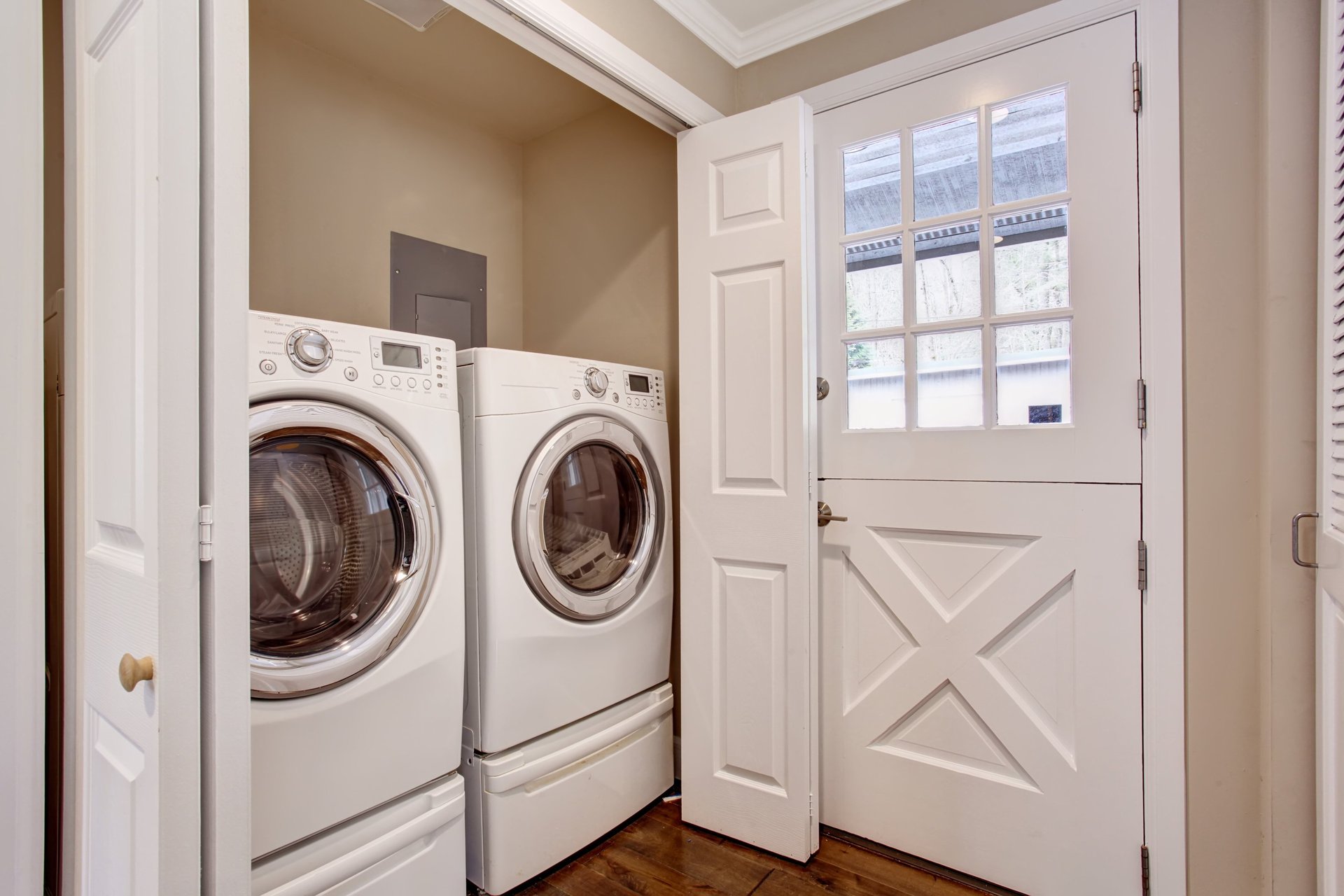
Amana Dryers: The Whirlpool Platform Without the Extras
Amana dryers run on the same core platform as Whirlpool dryers, and that's a proven design I've been repairing for decades. The drum, the motor, the belt routing, the gas valve assembly — all of it is shared engineering. Where Amana differs is in the controls: most models use basic thermostat-driven temperature regulation rather than the electronic moisture-sensing systems found on higher-end Whirlpool or Maytag dryers.
This simplicity is an advantage for repairs. A basic cycling thermostat is a $20 part. An electronic control board can be ten times that. The Amana dryer does what a dryer needs to do — tumble clothes in heated air until they're dry — without overcomplicating the process. After 45 years in this trade, I've come to appreciate machines that don't add complexity where it isn't needed.
An Amana Gas Dryer That Heated Intermittently
A family in Bloomington called because their Amana gas dryer would sometimes heat and sometimes not. Some loads came out perfectly dry, others were still damp after a full cycle. No error codes, no unusual sounds — just inconsistent heat.
Intermittent heating on a gas dryer usually points to the gas valve solenoid coils. On the Amana platform, there are two solenoid coils on the gas valve — a booster coil that opens the valve initially, and a holding coil that keeps it open. As these coils age, they develop higher resistance and can't generate enough magnetic pull when they're hot. The first ignition cycle of a load works fine because the coils are cool. But after the dryer cycles off and back on, the now-warm coils can't reliably open the valve.
I confirmed this by running the dryer and watching the igniter glow through the observation port. First cycle, the igniter glowed and the gas lit. Third cycle, the igniter glowed but no gas — the coils had warmed up and lost their pull. I replaced both solenoid coils, which is always done as a set, and ran the dryer through a full 50-minute test. Every ignition cycle fired consistently. A $25 repair that restored full function.
Common Amana Dryer Problems
Gas Valve Solenoid Coil Weakness
The gas valve coils on Amana dryers develop increased resistance as they age. This causes intermittent heating — the dryer heats on the first cycle but fails on subsequent ignition attempts within the same load. I always replace both coils together.
Thermal Fuse Blown
The thermal fuse on an Amana dryer is a one-time safety device on the blower housing. When it blows, the dryer runs but produces zero heat (electric models) or goes completely dead (some gas models). The root cause is almost always restricted venting.
Worn Drum Belt
Amana dryers use a thin, flat belt that wraps around the drum and routes through an idler pulley to the motor. After years of use, the belt stretches, cracks, or breaks entirely. A broken belt means the drum won't turn at all, though the motor may still run.
Cycling Thermostat Failure
The cycling thermostat regulates drum temperature by switching the heat source on and off. When it fails closed, the dryer overheats and may blow the thermal fuse. When it fails open, the dryer runs with no heat. This is a basic bimetal disc thermostat that I can test in seconds with a multimeter.
Amana Dryer Parts Available
Gas valve solenoid coil kits, thermal fuses, cycling thermostats, high-limit thermostats, drum belts, idler pulleys, drum rollers, heating elements for electric models, and igniters for gas models. Every Amana dryer part has a Whirlpool cross-reference, so I stock them on the truck and complete most repairs in one visit.
Amana Dryer Repair Makes Good Economic Sense
Amana dryers are budget-priced when new, but the repair economics are excellent because the parts are inexpensive and the design is shared with millions of Whirlpool-platform dryers. A gas valve coil set or thermal fuse replacement costs a fraction of a new dryer. These are solid machines that deserve to be repaired, not replaced.